




In the field of metal processing and warehousing and logistics, the choice of anti-rust oil is directly related to the quality of the product from the factory to the end users. Many buyers are faced with a wide range of anti-rust oils, often focusing only on the word "anti-rust", but ignoring the differences in specific working conditions. As a mature anti-rust oil product line on the market, the Hank BS-400 series has become the first choice for many manufacturing enterprises because it covers different anti-rust cycles, different film-forming types and good cost performance. But "BS-400" is not a single model, but a series. This article will disassemble the system and how to start from actual needs and correctly select the corresponding products in the Hank BS-400 series to ensure that the workpiece is not rusted or corroded during transportation, storage and even use.
First, clarify the true definition of the anti-rust cycle
When choosing anti-rust oil, the first thing is not to look at the price, but to calculate how long it needs to be protected. The products under the Hank BS-400 series are divided into short-term anti-rust, medium-term anti-rust and long-term anti-rust according to the anti-rust ability. Short-term anti-rust usually refers to 3 to 6 months in indoor unsheltered conditions, suitable for parts with fast turnover and immediate use after assembly; medium-term anti-rust coverage is 6 to 18 months, suitable for seasonal storage or export shipping environment; long-term anti-rust can reach more than 24 months, often used in inventory spare parts, precision bearings or molds. Many users mistakenly think that "anti-rust oil is the same, just spray it on and it's done", and as a result, short-term anti-rust oil is used for long-term storage, The Hank BS-400 series is clearly marked with the reference anti-rust period on the packaging, but it must be noted that the anti-rust period is closely related to the ambient temperature and humidity, packaging method, and pre-cleaning quality. If the workpiece is not completely dried after pickling or water-based cleaning, the performance of any anti-rust oil will be greatly reduced. So before choosing a model, ask yourself: How long do I plan to keep my parts? Do I need to open the box for inspection in the middle? Is the shipping destination in a coastal high-humidity environment or an inland dry area? Only by clarifying these issues can we talk about choosing a specific model.
Second, matching metal materials is the first line of defense against rust
The adaptability of different metals to anti-rust oils varies greatly. The Hank BS-400 series of products has specially optimized formulations for substrates such as cast iron, carbon steel, alloy steel, galvanized sheet, aluminum and aluminum alloys. Cast iron parts are prone to residual moisture and acidic substances because of the porosity on the surface. Anti-rust oils with good permeability and replacement ability are required, while ordinary anti-rust oils can only float on the surface and cannot penetrate into the pores. On the contrary, aluminum surface oxide film is sensitive to acidity and alkali. If the anti-rust oil contains some active sulfur or chlorine additives, it may cause corrosion. The special models for aluminum in the BS-400 series use neutral film-forming agents, which will not react with aluminum, and can form a dense protective layer on the surface of aluminum parts. For workpieces assembled with mixed metals, such as motor shells with aluminum castings and steel bearings inside, you can't just choose a single anti-rust oil, but should consider broad-spectrum products in the BS-400 series, or use a step-by-step treatment method. It is more important to note that the anti-rust oil will interact with the conversion film for workpieces that have been surface treated with blackening, phosphating, galvanizing, etc. The low viscosity and low acid value models in the Hank BS-400 series are more suitable for this type of sensitive surface, which can avoid the dissolution of the conversion film or color change. During the selection stage, submitting the workpiece material list and surface treatment process to the supplier's technicians is often more efficient than guessing by yourself.
III. The type of oil film determines the cost of post-processing
Many customers only care about the anti-rust effect when choosing anti-rust oil, but forget whether the subsequent process matches. Hank BS-400 series is divided into four categories according to the film formation characteristics: hard film, soft film, oil film and thin layer anti-rust oil. The hard film type forms a transparent hard protective film after drying, which has the strongest anti-rust performance, but it needs to be removed with solvent or alkaline cleaning agent later. It is suitable for large-diameter castings, steel coils and other products that do not require finishing. Soft film type has certain flexibility, long anti-rust period and is not easy to be damaged due to vibration. It is often used in automotive chassis parts and structural parts. Oil film type is the most common anti-rust method. The surface of the workpiece maintains a wet oil layer, which is suitable for precision parts that need to be oiled or assembled at any time. The thin layer of anti-rust oil is the star design in the Hank BS-400 series. After drying, the thickness is extremely thin, and it is difficult to detect the obvious oil layer with 20 or 30 times magnifying glass, but the anti-rust performance is still reliable. This thin layer of oil film can avoid the deviation of the size of the workpiece due to the thickness of the oil film during subsequent assembly, and also simplifies the cleaning process. For threaded fasteners, too thick oil film can cause torque deviation, and thin layer of anti-rust oil can significantly reduce this risk. So when choosing the BS-400 series, be sure to ask yourself whether the downstream process is "direct use" or "clean and then use". If the workpiece is an export equipment, the other party may require no residue, so a thin layer or water-soluble rust inhibitor must be selected, while an oil film type may cause the customer to reject it.
Fourth, salt spray test data is an important reference, but not the only indicator
Hank BS-400 series products will provide the number of salt spray test hours in the technical data, such as the number of hours without rust under the neutral salt spray test. Many buyers mechanically believe that "a product tested for 100 hours of salt spray must be better than a product tested for 72 hours", which is actually a misunderstanding. The salt spray test is an experiment to accelerate corrosion under a specific concentration, temperature, and air flow environment. It simulates a marine atmospheric environment and cannot be completely equivalent to an indoor humid and hot environment or an acid-alkali industrial environment. For example, if stored in a normal factory for 6 months, only 80 hours of anti-rust oil with neutral salt spray capacity may be required; while if stored in a seaside warehouse for 12 months, 200 hours of salt spray capacity may be required. The different models in the Hank BS-400 series have salt spray data designed for different application scenarios. When choosing, in addition to looking at the salt spray data, you should also refer to the results of the damp heat test, condensation test and displacement test. Replacement refers to the ability of the anti-rust oil to replace the residual moisture or hand sweat on the metal surface. For workpieces that have not been fully dried after being processed by water-based cutting fluid, high-replacement anti-rust oils are particularly important. So don't take the salt spray test as the only edict, but use it as a dimension, combined with the comprehensive judgment of the field environment.
Fifth, the construction method affects the viscosity and concentration selection
Hank BS-400 series can adapt to four common construction methods: soaking, spraying, brushing, and roller coating. When selecting a specific model, it is necessary to confirm that the viscosity of the anti-rust oil matches the construction conditions. The soaking method is often used for large batches of small parts, and the anti-rust oil is required to have good permeability and short flow time to avoid excessive oil when the parts are taken out. Generally, the BS-400 series medium and low viscosity models are selected. The temperature is controlled at 20 to 40 degrees Celsius, and the soaking is about 3 minutes. The spraying method requires the anti-rust oil to be low-soaking, good atomization, and moderate drying speed to avoid hanging on the surface of the workpiece after spraying. If an automatic spray line is used, the anti-rust oil must not contain particles that may clog the nozzle. Brush coating or roller coating is suitable for large plane or local repair. The anti-rust oil needs to have good thixotropy and adhesion, and it is not easy to slip off on the vertical surface. Some high-viscosity models in the Hank BS-400 series are specially designed for brushing. When brushing, the brush goes smoothly and the film thickness is uniform. On the contrary, if the large steel frame is manually painted with low-viscosity oil, the oil film is too thin and the anti-rust effect will be discounted. At the same time, pay attention to the use temperature of the anti-rust oil. In the low temperature environment in winter, some anti-rust oils will thicken and spray difficult. At this time, the model with low pour point and strong temperature adaptability should be selected. The Hank BS-400 series provides different pour point specifications. Northern customers should choose the low-temperature resistant grade for construction under indoor unheated conditions.
The packaging form and dilution ratio cannot be ignored
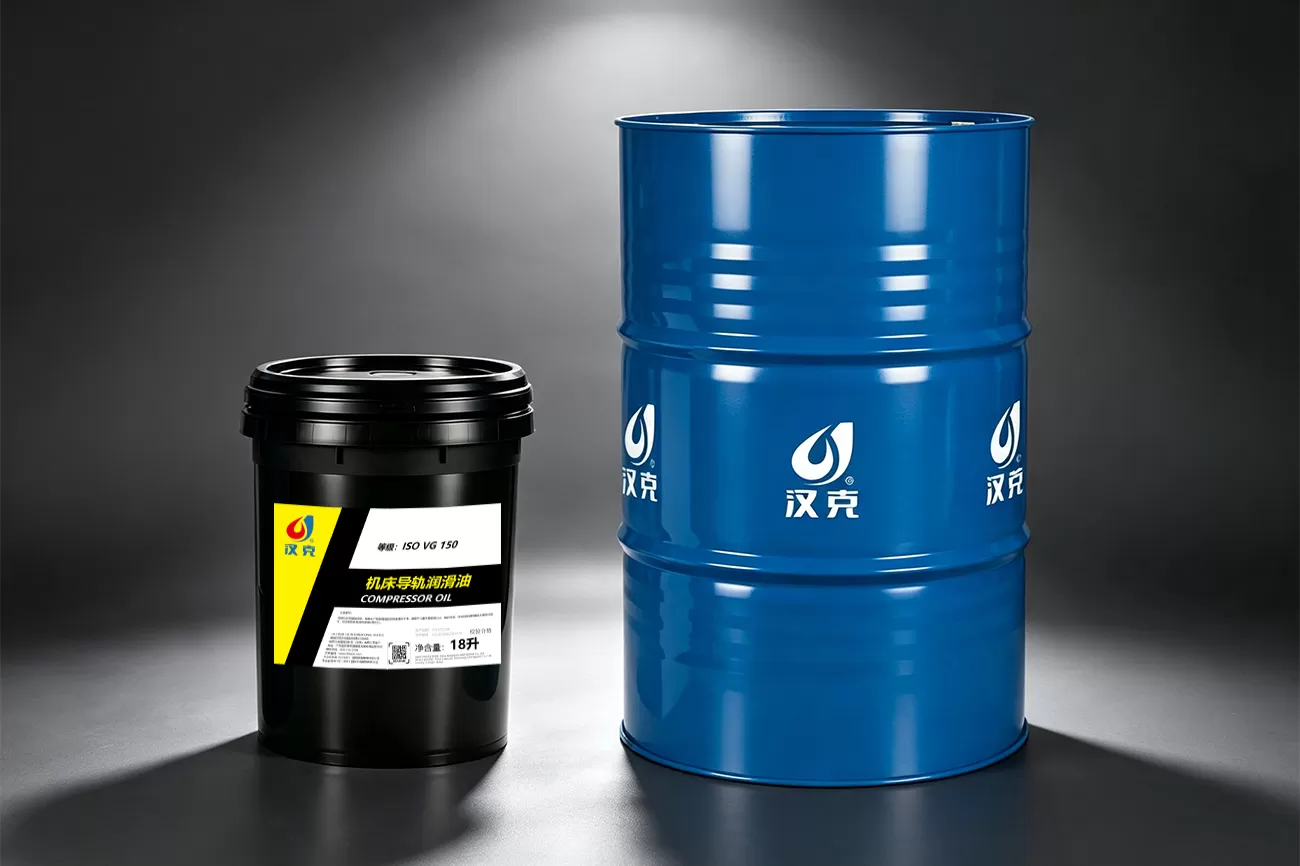
Hank BS-400 series is commonly packaged in 20L small drums, 200L large drums and 1000L ton drums. There are also a small number of aerosol can products for temporary recoating. Monthly consumption needs to be calculated before purchase to avoid frequent barrel changes or long-term storage deterioration. Anti-rust oil also has shelf life problems. Long-term storage may occur oxidation, phase separation or precipitation. It is recommended to follow the first-in, first-out principle. Some BS-400 series models can be diluted with a specific solvent in proportion to reduce the actual cost. But improper dilution will lead to a sudden drop in anti-rust performance. For example, if the solvent ratio is too high, the oil film thickness is insufficient, and the anti-rust period is shortened; if the solvent ratio is too low, the viscosity will become large and the leveling will be poor Users should strictly adjust according to the recommended proportions in the technical specification. It is best to use the matching solvent specified by the manufacturer to avoid compatibility problems between different solvents. Another point is easily overlooked: there may be a risk of compatibility between the anti-rust oil and the processing oil, cutting fluid or cleaning agent. If the emulsion composition remains before the workpiece, the direct application of the anti-rust oil may undergo chemical changes, resulting in white flocculent. We recommend that before replacing the new model of Hank BS-400 series, a small batch of field tests should be done to observe the appearance changes and anti-rust effect within 48 hours, and then expand the use.
VII. Environmental protection and safety indicators are becoming increasingly important
The current manufacturing industry has increasingly strict requirements for environmental compliance. The Hank BS-400 series has also launched low-VOC models and aromatic-free formulations according to different market regulations. When choosing anti-rust oils, you should know whether the products meet the restrictions on hazardous substances such as RoHS and REACH. Especially for metal parts exported to Europe, the other party may require a safety data table of anti-rust oils and confirm that they do not contain specific substances of high concern. In addition, fire safety at the construction site cannot be ignored. Solvent-based anti-rust oils have a low flash point and need to be kept away from fire sources. Some models in the Hank BS-400 series use high-flash-point solvents, which can improve transportation and storage safety to a certain extent. For operator health, products with low odor and no benzene solvents are more popular. Although the price of such high-end models is slightly higher, the risk of environmental protection penalties, the cost of employee physical examination and the investment in ventilation equipment are more cost-effective. Especially for brushing operations in closed workshops, choosing low-toxic anti-rust oil is responsible for the health of employees.
Eight, economic algorithms: don't just look at the unit price of barrels
When purchasing anti-rust oil, the most confusing thing is the unit price. A 20L barrel of anti-rust oil is priced at 100 yuan less, but may require two coats, while another model, although more expensive at 150 yuan, can provide longer-term protection at the same thickness. The correct economic evaluation should calculate the "unit protection cost", that is, how many square meters of metal can be protected per cubic centimeter of anti-rust oil, and how many months. Although the price of a single barrel of high-concentration concentrated products in the Hank BS-400 series is high, it can be diluted to several times the volume proportionally, and the comprehensive cost is lower. In addition, the cost of waste oil treatment should also be calculated. The thicker the oil film, the more oil the workpiece carries, and the more oil drips from subsequent cleaning or anti-rust oil, which also increases the cost of contaminated ground and wastewater treatment. The use of a thin layer of anti-rust oil can save about 30% of the oil consumption, while reducing the drip loss during packaging and transportation. For the precision fastener industry, after the use of a thin layer of anti-rust oil, the next process does not need to be cleaned, but directly assembled, saving considerable man-hours and cleaning agent costs. Therefore, in the procurement evaluation, the anti-rust oil, labor, equipment depreciation, waste liquid treatment, and defective product losses should all be included in the accounting framework, and the truly matching models in the Hank BS-400 series should be selected instead of simple price comparison.
Nine, case comparison: different selection of the same parts
We shall assume a bearing manufacturing plant that produces deep groove ball bearings with specification 6205. The material is bearing steel, and the surface is ground to show a lively iron surface. If the customer requires the bearings to be assembled directly after one year of storage in the warehouse without secondary cleaning, then the Hank BS-400 series recommends choosing a thin layer of anti-rust oil, which has a medium salt spray capacity and does not contain too much tackifier to avoid the sticky feeling when the bearing rotates. If it is exported to South East Asia by sea, the sailing period is four weeks, and then stored in the port warehouse for two months, then a soft film anti-rust oil should be selected, and it is recommended to pack it with an anti-rust bag. Soft film can prevent the protective film from cracking due to vibration during handling, and at the same time avoid white rust in the high humidity environment of shipping. Another example is a set of automobile cast iron brake discs. The surface has been machined to the accuracy requirements and needs to be rust-proof for six to nine months. When it is finally used, should it be assembled with rust or after cleaning? If it is assembled with rust, you should choose a hard thin layer anti-rust oil with strong adhesion and not easy to adhere to dust; if it is assembled after cleaning, you can choose a normal oil film type. From these comparisons, it can be seen that each model in the Hank BS-400 series has its own application boundaries. Blindly purchasing "general-purpose" anti-rust oil is often paying for uncertainty.
Supplier technical and service support is the invisible yardstick for selection
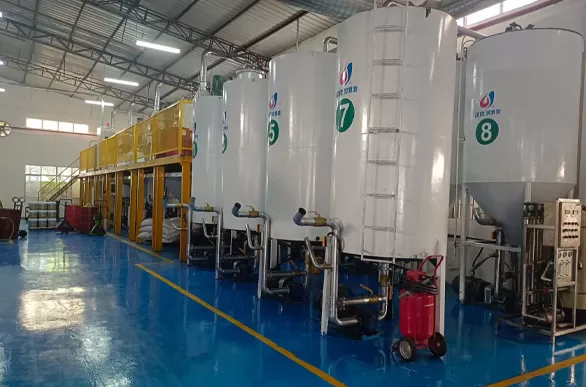
No matter how good the anti-rust oil is, if there is a lack of application guidance, it is easy to fail. The technical team behind the Hank BS-400 series can provide on-site sampling, rust cause analysis, salt spray laboratory verification and other services. When we are not sure which model to choose, we can apply for samples first and do a week of simulation testing in our own workshop. Specific method: Take several standard test pieces of the same material, after degreasing, washing and drying, apply the candidate anti-rust oil according to the estimated process, and then place them in the actual environment of the workshop. Record the temperature and humidity every day, and regularly observe the rust point with magnifying glass. Although a week of accelerated testing cannot completely replace months of natural storage, it can help identify obvious compatibility and film formation problems. If the supplier is willing to provide spectral analysis or formulation qualitative services, it is better to ensure the scientific selection. Therefore, the purchase of anti-rust oil is not a simple purchase, but a technical cooperation.
Summary of common selection mistakes
The first misunderstanding is "the more sticky the better". Many old masters think that the thicker the anti-rust oil, the more durable it is. In fact, too thick oil film is easy to absorb dust and abrasive particles, resulting in a decrease in subsequent assembly accuracy, while slowing down heat dissipation and hindering final cleaning. The second is "the longer the anti-rust period, the better". Long-term anti-rust oils tend to add more corrosion inhibitors, and some ingredients may not be compatible with post-treatment coatings or greases. The third is "the cheap one must be bad, and the expensive one must be good". The price is only the result, what really needs to be matched is the type of workpiece and the use scenario. The fourth is "buy in large quantities if the sample test is qualified". Sample testing is usually carried out on a small area of surface. The actual workpiece may have different pre-treatment residues. During mass production, Therefore, the first inspection of the batch and regular sampling inspection are essential. The fifth is to "only pay attention to the anti-rust oil itself, ignore packaging and storage". The anti-rust oil drum should be used up as soon as possible after opening, and the lid should be kept closed to prevent solvent volatilization from causing viscosity to rise. If crust appears on the surface of the anti-rust oil, it should be removed before use, do not stir and mix impurities.
Final selection operation list
In order to give you a better idea of how to operate, here is a five-step selection checklist for the Hank BS-400 series. The first step is to collect the material grade, metallographic surface condition, pretreatment process and residue information of the workpiece. The second step is to clarify the target rust prevention cycle, end point climatic conditions, intermediate transportation method and packaging form. The third step is to confirm the salt spray hour, moisture and heat test data and the applicable metal range with the supplier's technicians. The fourth step is to choose the construction method, viscosity, drying speed and whether dilution is required according to the process conditions. The fifth step is to carry out small batch trial production and on-site hanging piece verification, record the temperature, humidity and corrosion results, and form the internal selection standard of the enterprise. Remember that the core of the whole process is to "use the working conditions as the anchor and the data as the ruler", not to guess from experience.
The reason why the Hank BS-400 series is frequently mentioned is not because it has some kind of magic formula, but because it disassembles the complex anti-rust requirements into standardized branches, allowing engineers to find answers under a clear framework. Anti-rust oil is not the more expensive the better, nor the higher the label, but the better the match. In the face of the accumulation of metal parts in the workshop and the quality commitment after the delivery date, I hope every engineer can make the most rational selection with the help of the systematic solution of the Hank BS-400 series. The really powerful factory is often not that it never rust, but that it has been blocked by the wisdom of selection before rust occurs. I hope this article can help you find the "custom-grade" protection of your workpiece in the world of anti-rust oil.