


The basic difference between lubricating oil and grease
| comparison term | lubricating oil | grease |
|---|---|---|
| form | Liquid, good fluidity | Semi-fluid or semi-solid paste with adhesion |
| composition | Base oil (approximately 90%) + additives (approximately 10%) | Base oil (70%~ 90%) + thickening agent (8%~ 30%) + additives ( |
| Heat dissipation capacity | Good, can take away heat through circulation | Poor, not conducive to rapid heat conduction |
| Sealed and dustproof | general | Better, can effectively isolate moisture, dust and impurities |
| applicable scenario | Engine, gearbox, hydraulic system and other high-speed or circulating lubrication parts | Low-speed heavy-duty bearings, parts that require long-term lubrication and are not easy to replace |
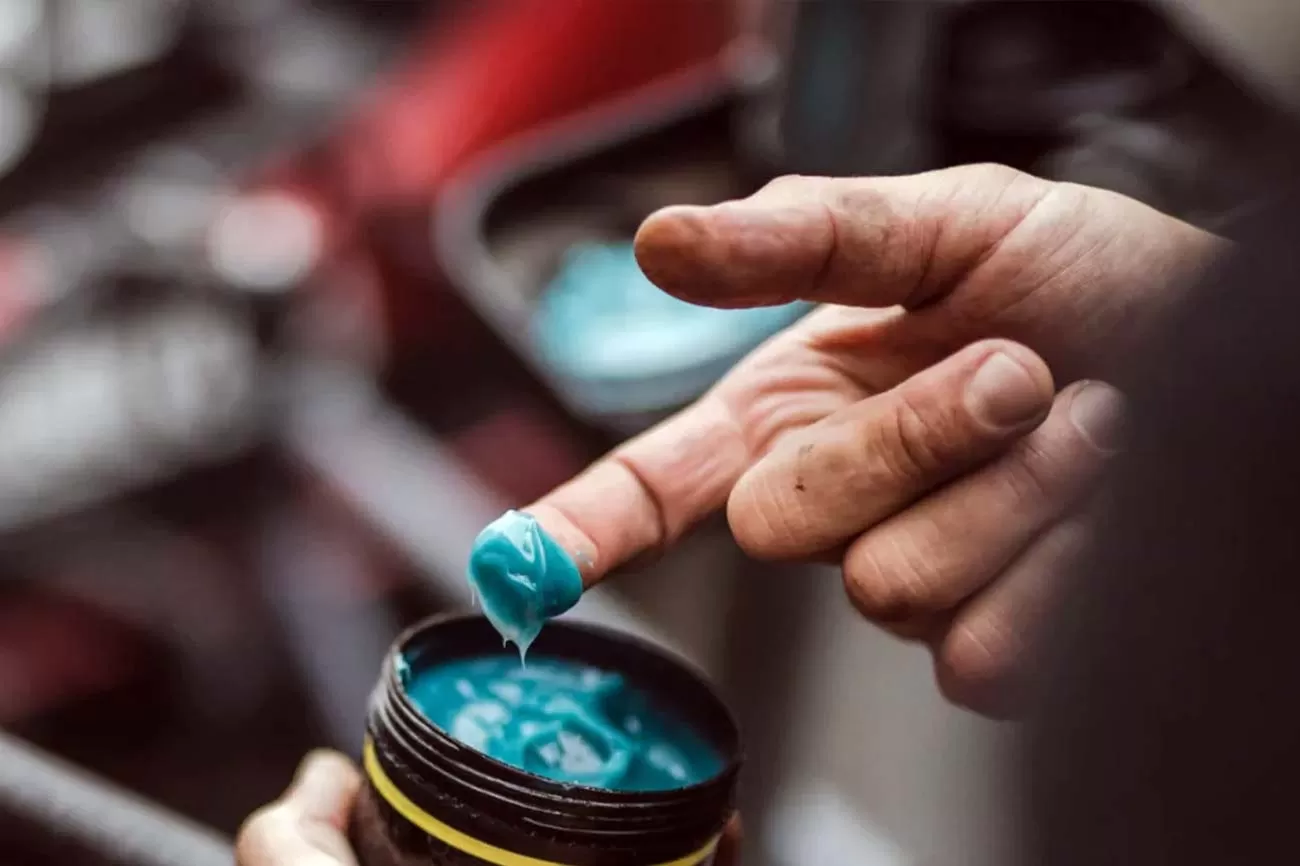
The lubricating grease can be understood as adding a thickening agent (similar to a sponge structure) to the lubricating oil, locking the base oil in a three-dimensional network to fix and slowly release the lubricating oil. Its lubricating performance mainly depends on the quality of the base oil.
Eight functions of lubricants
Cooling and heat dissipation - preventing friction heat from causing the temperature of parts to rise, avoiding adhesive wear and corrosion wear; Sealing protection - isolating moisture, oxygen and harmful media in humid air to prevent internal medium leakage; Washing dirt - removing abrasive particles and external impurities caused by friction, reducing wear; Reducing friction and wear - forming a lubricating film to reduce the friction factor between two moving parts; Anti-rust - protecting metal surfaces from corrosion; Vibration reduction - playing a role in damping and absorbing vibration; Reducing power consumption - improving equipment operation characteristics and extending equipment life; Power transmission - playing a role in transferring power in equipment such as hydraulic systems.
The composition of lubricating oil
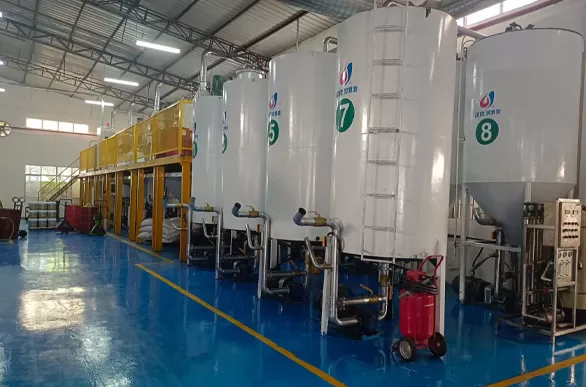
Lubricating oil is composed of base oil and additives. Base oil is the main component, which determines the basic properties of lubricating oil. There are mainly four categories: paraffin base, naphthyl, aromatic base and synthetic base. Base oil in engine oil usually accounts for about 90%. Its quality is crucial to performance and provides the most basic lubrication and cooling functions. Additives are used to make up for and improve the deficiencies of base oil and give it new properties. Common ones include anti-wear agents, anti-oxidants, anti-rust agents, cleaning dispersants, viscosity index improvers, etc.
Factors to consider when selecting lubricating oil
Movement speed - low viscosity oil should be used when the speed is high, and high viscosity oil can be used when the speed is low; working temperature - high viscosity or good oxidation resistance oil should be used when the temperature is high; bearing condition - high viscosity or extreme pressure oil should be used when bearing heavy load or impact load; matching clearance - high viscosity oil should be used when the gap of the moving pair is large, and low viscosity oil should be used when the gap is small; surface roughness - high viscosity oil should be used when the roughness is large, and low viscosity oil should be used instead; working environment - wet or chemical medium should be used when the anti-emulsification or corrosion resistance oil.
Application occasions of common greases
| Grease type | Main features | Operating temperature range | applicable occasions |
|---|---|---|---|
| Calcium based grease | Good water resistance, not high temperature resistance | -10℃ ~ 60℃ | Humid environment or parts in contact with water, such as agricultural machinery, water pump bearings |
| Sodium based grease | High temperature resistance, not water resistant (emulsified in contact with water) | -10℃ ~ 110℃ | Dry high temperature environment, such as motor bearings, fan bearings |
| Lithium based grease | Both heat resistance and water resistance, good versatility | -20℃ ~ 120℃ | Most industrial bearings, motors, automotive wheels, and other general applications |
| Extreme Pressure Lithium Grease | Contains extreme pressure additives, resistant to heavy loads | Depending on the base oil | Heavy duty gears, rolling mill bearings, mining equipment |
| Lithium molybdenum disulfide grease | Contains molybdenum disulfide, resistant to extreme pressure and vibration | Depending on the base oil | Shock loads, vibrations, or low-speed heavy loads |
| complex calcium lipid | High temperature resistance, high load | -20 ℃~ 150 ℃ or more | High temperature and high load conditions, such as continuous casting machines, sintering machine bearings |
| Urea grease (polyurea grease) | High temperature and long life, good oxidation stability | -20℃ ~ 180℃ | High temperature, long life maintenance-free occasions, such as closed bearings |
The main points of selecting grease according to the working conditions
In addition to referring to the equipment manual, it is also necessary to comprehensively consider the actual working conditions.
Sodium-based grease should not be used in humid environments (it is easy to emulsify and lose in case of water), and calcium-based or lithium-based grease should be selected;
The parts in contact with acidic gases should be lubricated with good acid resistance.
In high-temperature environments, grease with a dripping point at least 20 to 30 degrees Celsius higher than the operating temperature should be selected.
When heavy load and low speed, choose high viscosity base oil and add extreme pressure agent, the consistency is slightly higher (No. 2 or No. 3);
Low viscosity base oil and low consistency (No. 1 or No. 2) are selected during high speed and light load to avoid stirring oil and heating;
The centralized fat supply system needs to choose No. 00 or No. 1 fat with good pumping performance.
Selection of grease grade (number)
| Fat supply method or use requirements | Recommended grade (cone level) |
|---|---|
| Centralized fat supply system (requires pumping) | Number 00, or number 1 |
| Manually fill with fat gun and fat cup | No. 1, No. 2, or No. 3 |
| Sealed parts that do not change fat for long-term use | No. 2, or No. 3 (thicker and less prone to leakage) |
| General rolling bearings | No. 2, or No. 3. |
| Open gear or gearbox | No. 0, or No. 1 (softer, easier to enter the tooth surface) |
After adding grease, the temperature of the equipment rises instead or there is still a reason for wear and tear
The amount of filling is insufficient, the lubrication effect is poor, and the friction increases the heat generation; the amount of filling is too large, the agitation resistance is large, and the heat dissipation is poor; the type of grease does not match or the quality is poor, and an effective oil film cannot be formed; the new grease cannot be quickly and evenly distributed after adding, resulting in excessive local friction; the mixed use of different types of grease, structural damage or additive reaction, and the performance is reduced; the lack of running-in cycle - the correct way is to run at 30% to 60% of the standard speed for a period of time after adding grease, so that the grease is evenly spread and then run at full speed.
Can grease be diluted with lubricating oil?
No. Grease is a colloidal structure composed of a thickener and a base oil. After grease is formed, lubricating oil is added. Even if it is stirred, it cannot be evenly dispersed. It is easy to separate and lose during use, but instead lose the adhesion and sealing properties of the grease. If you need softer grease in winter, you should directly choose No. 1 or No. 2 products with a smaller number, rather than adding lubricating oil yourself.
Can different types of grease be mixed?
In principle, no. Mixing different thickeners (such as lithium-based and calcium-based) may damage the colloidal structure, resulting in softening or hardening; chemical reactions may occur between different additives (especially extreme pressure agents) to form corrosive substances. When changing varieties, the old fat should be completely removed, and it is best to rinse it with new fat before adding it.
Is the more wheel bearing grease added, the better?
No. If the wheel hub cavity is filled with too much grease, most of it will be thrown to the cavity wall, unable to participate in bearing lubrication. Instead, it will increase the agitation resistance and cause the temperature to rise. After high temperature melting, the grease may penetrate into the brake drum, causing brake failure. The correct way is "empty hub lubrication" - only apply an appropriate amount of grease to the surface of the bearing rolling elements and raceways, and the cavity will no longer be filled.
Why does grease become hard?
High temperatures cause excessive evaporation or loss of base oil from thickeners, causing the grease to harden; centrifugal force generated by high-speed rotation throws the base oil out, thickening the residual grease; long service life (more than 6 months to one year), base oil oxidation, volatilization; oil separation phenomenon under continuous heavy pressure; storage time is too long or storage temperature is too high will also accelerate aging. Hardened grease cannot provide sufficient lubrication and should be replaced in time.
Is it normal for the lubricating oil to turn black?
There are usually three reasons for the blackening of oil: the oxidative deterioration of the lubricating oil itself; the mixing of metal powder caused by equipment wear; and the entry of external impurities (dust, seal damage). It is normal for the color to deepen slightly after a period of use, but it should not become very black (except for engine oil, diesel engine oil will turn black due to the action of cleaning dispersants, which is a normal phenomenon). If it turns black quickly without external contaminants, it may be an oil quality problem, and you should consider changing the brand or grade.
What is the reason for the white oil?
Generally, emulsification occurs after water enters, and the oil becomes milky white or turbid. When water enters, it will damage the oil film, accelerate oxidation and cause the failure of additives. If you find whitening, immediately check whether the oil seal is damaged, check the water source, thoroughly clean the system before changing the oil, and store the oil drum in a rain shelter.
Can I mix old and new oil when changing oil?
Not recommended. The old oil contains harmful substances such as wear particles, oxides, moisture, etc. Mixing with the new oil will reduce the level of the new oil and shorten the service life. Try to drain the old oil when changing the oil. It is best to rinse the system with the new oil before adding it.
Can the replaced lubricating oil be precipitated and reused?
No. After use, all performance indicators of the oil have decreased, the additives are exhausted, and the oxidation products and fine particles cannot be removed by simple precipitation. Repeated use is equivalent to using substandard products, which will exacerbate equipment wear.
"Five Rules" of Equipment Lubrication Management
Fixed point - clarify the location and quantity of each lubrication point of the equipment; Timing - refuel, check and replace oil according to the specified cycle; Quality - select the specified brand and quality of lubricant according to the requirements of the equipment; Quantitative - control the amount of each filling to avoid too much or too little; Designated person - implement the responsibility of a special person and establish a responsibility system.