


In the field of metal processing and warehousing and logistics, anti-rust oil is an important barrier to protect the surface of the workpiece and resist rust. However, many operators often torn a question: how to apply anti-rust oil uniformly and fuel-efficient? In fact, the coating method depends to a large extent on the shape, batch, accuracy requirements and on-site equipment conditions of the workpiece. Hank BS-400 series anti-rust oil, as a high-performance solvent-based anti-rust product, supports three mainstream oil application methods: soaking, brushing and spraying. Below we systematically analyze how to apply Hank BS-400 series anti-rust oil from three dimensions: process principle, operation points and applicable scenarios. It is the most scientific and economical.
First, immersion and oiling method: the first choice for large batches of small workpieces
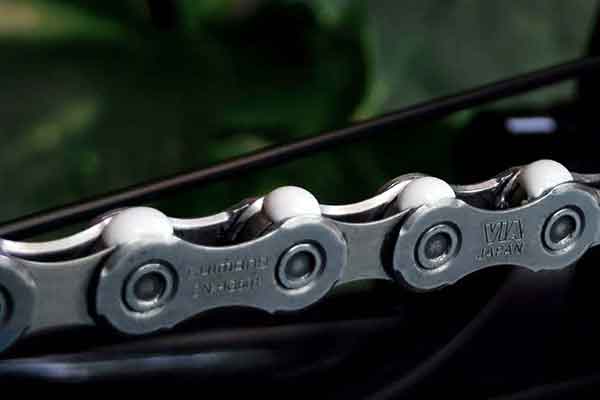
The soaking method is a process in which the cleaned metal workpiece is completely immersed in Hank BS-400 series anti-rust oil, allowing the oil to fully infiltrate the inner and outer surfaces of the workpiece, and then draining or centrifugal drying. For screws, nuts, bearings, springs, chains and other small hardware parts with complex shapes and large quantities, the soaking method is extremely efficient and can ensure that the oil film covers every hidden corner.
Operation points:
1. The workpiece must be cleaned before soaking to remove surface moisture, sweat, rust and cutting fluid residues. If the surface of the workpiece is stained with acidic substances or inorganic salts, it will seriously affect the adhesion of anti-rust oil and metal, resulting in local failure of the oil film.
2. Use a stainless steel mesh basket or a perforated container to hold the workpiece to avoid stacking the workpiece too thick. The ideal state is a single or thin layer evenly arranged, so that each product can fully contact the oil. If the workpiece is stacked too tightly, you can gently shake the mesh basket during the soaking process to help drain air bubbles.
3. Hank BS-400 series anti-rust oil is a fast-drying solvent oil, and the soaking time at room temperature is recommended to be between 30 seconds and 2 minutes. The specific time depends on the material of the workpiece and the surface roughness. Cast iron requires a slightly longer soaking time than cold-rolled steel. Soaking for too long will not bring additional anti-rust effect, but will increase the amount of take-out and cause oil waste.
4. After taking out the workpiece, it should be placed on the drain rack with the oil tray and left to stand for 5 to 10 minutes to allow the excess oil to flow back to the oil tank naturally. Mass production can use a centrifugal dryer to throw off the excess oil film on the surface of the workpiece and recycle it after recovery to reduce fuel consumption.
5. The soaking oil tank needs to be equipped with a filter screen or regularly clean the bottom impurities. When the oil becomes turbid or the anti-rust performance decreases, new oil should be replenished or replaced as a whole in time.
Advantages and limitations: The biggest advantage of the soaking method is that it covers a comprehensive range and has no dead ends, especially suitable for parts with many inner holes, threads and blind holes. However, its disadvantage is that the amount of oil is large, the oil consumption is relatively high, and for large workpieces and special-shaped welded parts, a large oil tank volume is required, which is not very economical. Therefore, the soaking method is more suitable for batch processing of small and medium-sized standard parts. Hank BS-400 series oil film is thinner, and it can form a semi-dry protective film after soaking and draining. It will not stick to the hands like ordinary anti-rust oil, which greatly improves the convenience of rear assembly.
Second, brushing and oiling method: flexible and convenient local protection
Brush coating is the most traditional and intuitive way to apply anti-rust oil. Use a brush, roller or cotton yarn to dip Hank BS-400 series anti-rust oil and apply it evenly to the metal surface. This method may seem simple, but it still requires certain skills to apply evenly, without leakage and accumulation.
Operation points:
1. Choose a bristle brush or nylon brush with moderate hardness and no hair loss. For large areas of planes, a roller brush can be used to speed up the construction; for details such as welds, grooves, corners, etc., a fine brush can be used for recoating.
2. It is also necessary to ensure that the metal surface is dry and clean before brushing. If the workpiece is large and cannot be cleaned as a whole, you can first wipe the part to be coated with cotton yarn dipped in degreasing agent, and then dry it with a clean rag.
3. Do not dip too much oil at one time when brushing, keep the bristles immersed in one-third of the oil. The force should be uniform, and brush in sequence in the same direction to avoid repeated application back and forth, otherwise it is easy to damage the already covered oil film and produce bubbles or flow marks.
4. For parts where the brush is difficult to penetrate, such as the inner wall of the pipe fittings and the inside of the drilling hole, a long-handled cotton swab can be dipped in oil and then inserted into the rotation, or the oil can be directly poured into the hole and then poured out to ensure that the oil film adheres to the inner wall.
5. Hank BS-400 series anti-rust oil dries faster, and a transparent protective film forms on the surface about 10 to 15 minutes after brushing. If the ambient temperature is low or the humidity is high, the drying time can be appropriately extended, or a fan can be used to assist in accelerating solvent volatilization.
6. After brushing, the remaining oil should be sealed and stored to prevent solvent volatilization from causing viscosity to rise. The brush can be washed with kerosene or special cleaning agent for next use.
Advantages and limitations: The biggest advantage of the brush coating method is flexibility, no need for complex equipment investment, suitable for local protection of large equipment, steel structure parts, molds, machine tool guides, etc., and also easy to repair and maintain the already assembled equipment. The disadvantage is that the work efficiency is low, the labor cost is high, and the thickness of the oil film is greatly affected by the operator's technique. If the brush coating is uneven, it is easy to cause local rust. Therefore, the brush coating method is more suitable for temporary rust prevention in small batches, large workpieces or repair sites.
III. Spraying and oiling method: an efficient and uniform automation solution
The spraying method is a method of using a spray gun or automatic spraying equipment to atomize the Hank BS-400 series anti-rust oil and adhere it evenly to the surface of the workpiece. According to the different atomization methods, it can be divided into air spraying, airless spraying and electrostatic spraying. Among them, air spraying is the most common and is suitable for small and medium-sized workpieces; electrostatic spraying has better adhesion to metal workpieces and higher paint utilization.
Operation points:
1. Adjust the gun pressure before spraying. Hank BS-400 series anti-rust oil is a low-viscosity solvent-based oil. When spraying air, it is recommended to control the pressure at 0.3 to 500 billion Pa and keep the spray distance at 20 to 30 cm. Excessive pressure will cause serious oil mist splashing. If the pressure is too small, the oil particles will be too thick and the coating will be uneven.
2. Select the nozzle diameter of the spray gun according to the shape of the workpiece. A diameter of 1.0 to 1.3 mm can be selected for flat workpieces, and a diameter of 0.8 to 1.0 mm is recommended for grooves and complex surfaces to ensure atomization fineness and penetration.
3. The spraying operation should follow the principle of "thin and uniform". The thickness of each spray should be controlled at 5 to 10 microns, and it is appropriate to continuously wet and shiny the surface of the workpiece. Do not spray too thick at one time, otherwise the surface of the oil film is prone to orange peel or hanging phenomenon, and the internal solvent is not easy to evaporate, but reduces the early anti-rust performance.
4. For large equipment or assembly line operations, a reciprocating automatic sprinkler can be used. Hanke BS-400 series anti-rust oil is transported to multiple nozzles through the pumping system, and the workpiece passes through the conveyor chain at a uniform speed to achieve continuous spraying. Equipment should be equipped with explosion-proof fans and waste oil recovery devices to ensure safe production.
5. After spraying, the workpiece should be placed in a ventilated place to dry naturally, or enter the drying channel to accelerate solvent evaporation at 60 to 80 degrees Celsius to obtain a dry dura layer.
Advantages and limitations: The spraying method has high production efficiency, uniform coating film, and is suitable for medium and large-scale continuous production, especially for workpieces with flat or regular surfaces such as plates, pipes, and stamping parts. However, the spraying method has the problem of oil mist drifting, requires good ventilation and explosion-proof measures, and has a certain impact on the health of the operator. In addition, the spraying process generates over-spray losses, and the oil utilization rate is about 70% to 85%. For high value-added workpieces, an electrostatic spray gun can be installed to make the oil mist adsorbed to the metal surface in a directional manner under the action of an electric field, improving the utilization rate to more than 90%.
IV. General precautions for Hank BS-400 series under different oiling methods
No matter whether you choose to soak, brush or spray, the following key points must be kept in mind, otherwise the anti-rust effect will be greatly reduced:
1. Preliminary cleaning is the foundation of anti-rust. If the metal surface is not removed from oil, dust, glove sweat and other pollutants, the anti-rust oil cannot fit closely with the metal matrix, and crevice corrosion is prone to occur under the oil film. It is recommended to use an alkaline degreaser or a special metal cleaner for cleaning, and then fully dry.
2. The thickness of the oil film is not as thick as possible. Hank BS-400 series is a thin layer of anti-rust oil, and the recommended film thickness is 5 to 15 microns. Too thick oil film not only wastes material, but also softens the oil film due to solvent residue, reducing the ability to resist moisture and heat. In actual production, it can be coated in a "small amount of times" to ensure uniform coverage.
3. The anti-rust cycle is closely related to the storage environment. In indoor unsheltered conditions, the anti-rust effect of Hank BS-400 series can reach 6 to 12 months; in outdoor or humid environments, it needs to be matched with anti-rust paper or sealed packaging to achieve the same anti-rust period. It is recommended to avoid direct sunlight and rain after the workpiece is oiled.
4. Pay attention to the compatibility of different metals. Hank BS-400 series is suitable for ferrous metals such as steel, iron, cast iron, galvanized sheet, and can also be used for non-ferrous metals such as aluminum and copper. However, when long-term contact with copper alloys or magnesium alloys with special requirements, it is recommended to do a sample test first.
5. Operational safety should not be ignored. The Hank BS-400 series contains solvent ingredients. It must be kept away from open flames in the soaking and spraying operation area and equipped with fire extinguisher materials. Operators should wear anti-solvent gloves and protective glasses to keep the workshop well ventilated.
How to choose the most suitable oiling method according to the characteristics of the workpiece
Faced with the question of "how to apply anti-rust oil", there is no absolute optimal answer, only the most matching solution. We can make quick decisions based on the following principles:
Workpiece size and weight: large castings and structural parts are preferred to be painted or sprayed; small fasteners and stamping parts are preferred to be soaked.
Batch size: single piece or small batch maintenance, brushing is the most convenient; medium and large batch production, soaking or automatic spraying is more economical.
Shape complexity: for workpieces with many deep holes and blind holes, the soaking method can achieve full coverage; for regular profiles such as channel steel and angle steel, the spraying efficiency is the highest.
After-process requirements: If the workpiece needs to be assembled, welded or painted after being oiled, the Hank BS-400 series with thin film layer and washable should be selected, and it should be fully dried after oiling to avoid oil slick contamination.
Storage environment: long-term storage or ocean transportation, it is recommended to soak and seal packaging; short-term turnover, brushing or spraying can meet the requirements.
VI. Practical use case reference for the Hank BS-400 series
An auto parts factory produces brake discs. The original use of impregnated anti-rust oil, due to the large surface area of the brake disc and the large amount of oil, the oil film is too thick during subsequent assembly. After switching to the Hank BS-400 series, the electrostatic spraying process is used to control the film thickness at about 8 microns. Not only is the anti-rust performance stable, but the surface of the brake disc feels dry, and the assembly workshop has given good feedback. Another fastener company uses the Hank BS-400 series for centrifugal immersion treatment, batch processing of screws and washers, the production efficiency is increased by 30%, and the oil consumption is reduced by 15% compared with the original ordinary anti-rust oil.
To sum up, how to apply anti-rust oil is not so complicated. The key is to master the essence of the three processes of soaking, brushing and spraying, and use it flexibly in combination with its own product characteristics. Hank BS-400 series anti-rust oil can show strong anti-rust ability under three oiling methods due to its excellent solvent volatilization speed and film-forming compactness. As long as you do a good job of pre-cleaning, control the film thickness, and pay attention to construction safety, you can keep every metal workpiece away from rust and keep it as good as new for a long time. In actual production management, it is recommended to establish oiling process specifications, regularly check the oil concentration and impurity content, and train operators to strictly follow the technical requirements of Hank BS-400 series. This will not only maximize the effectiveness of anti-rust grease, but also reduce rework costs and improve the market reputation of the product. Finally, one more point: no matter which way you apply oil, please make sure that Hank BS-400 series oils are used within the shelf life and stored in a cool and dry place. If you stop using it for a long time, you need to fully stir it before re-use to make the oil in the barrel uniform. Only the whole process of lean management from oil selection, oiling to storage and transportation can truly achieve the anti-rust guarantee of no "wet".