

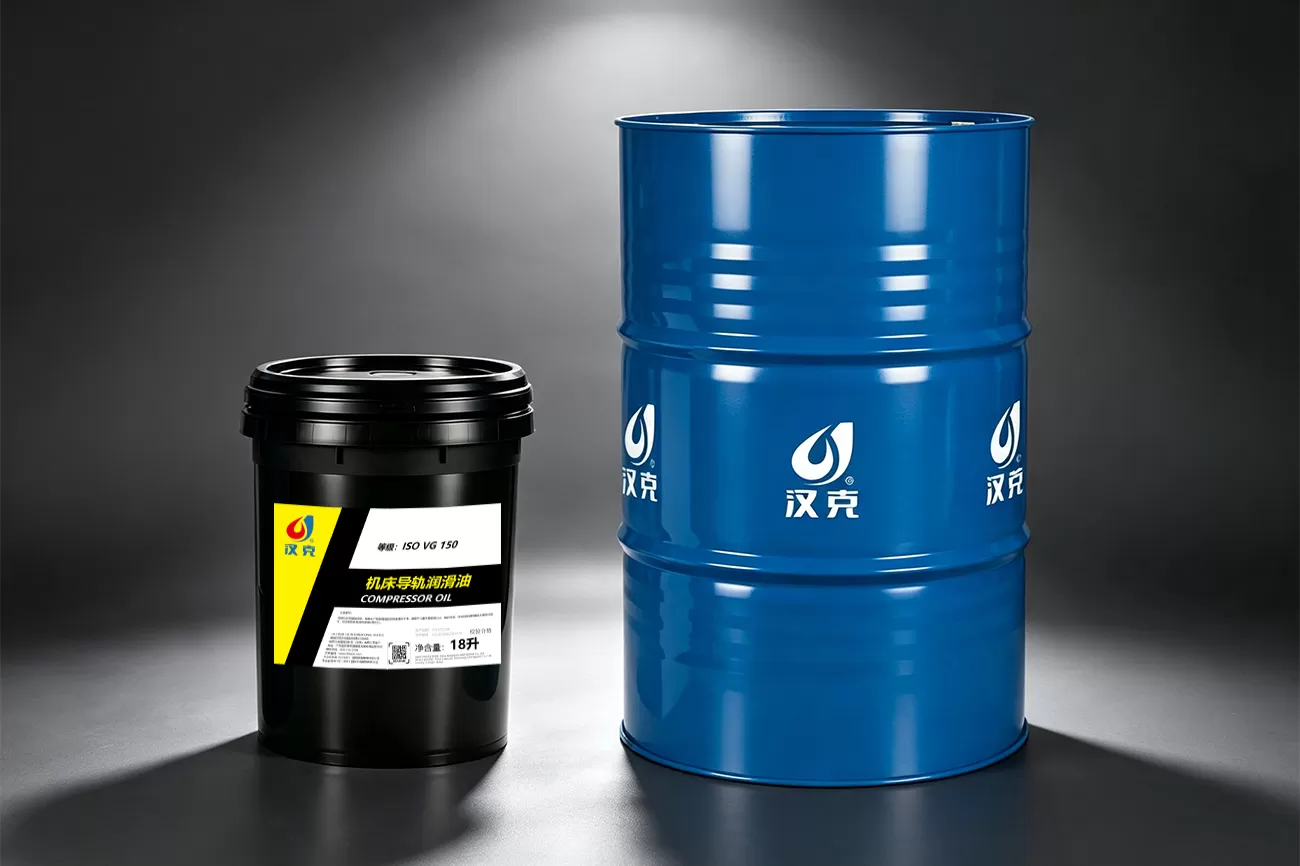



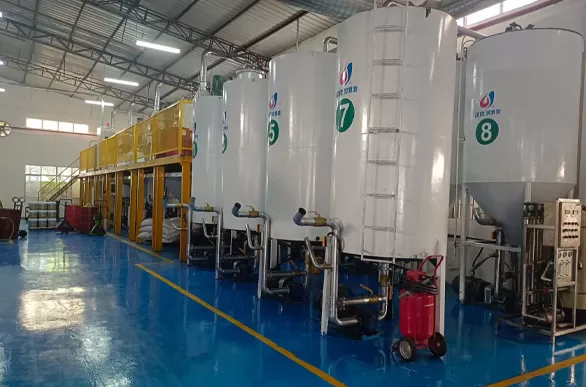

In the field of industrial manufacturing and warehousing logistics, the problem of rust of metal workpieces has always been a core pain point that plagues engineers and warehouse managers. Whether it is precision bearings, rack and pinions, or large molds and fasteners, once they are eroded by salt spray, moisture, acid and alkali media during storage or during transportation, rust spots on the surface will affect the assembly accuracy, and in severe cases, the entire component will be scrapped, causing immeasurable economic losses. In response to this long-standing industry problem, the Hank Metal Anti-rust Oil BS-400 series entered the market with "long-term storage" and "salt spray resistance" as its core selling points. So, is this product really able to provide long-lasting and reliable protection for metals in extreme environments as advertised? This article will provide in-depth evaluation from multiple dimensions such as product characteristics, laboratory data, and practical applications.
Product positioning and technical background
Hank Metal Anti-Rust Oil BS-400 series is a special anti-rust oil specially designed for medium and long-term storage and anti-rust and high salt spray environments. The series covers a variety of models with different viscosity grades and volatilization characteristics to adapt to the protection needs of different metal materials, different processing accuracy and different packaging methods. Compared with ordinary anti-rust oils, the BS-400 series emphasizes two major technological breakthroughs: one is the use of a composite anti-rust additive system, which can form a dense and self-healing molecular film on the metal surface; the other is to optimize the permeability and spread of the base oil to ensure uniform coverage even on complex geometric workpieces without dead angle protection.
In today's increasingly stringent environmental regulations, the BS-400 series also strictly controls aromatic hydrocarbon content and volatile organic compound emissions, complying with RoHS and REACH standards, making it a compliance advantage in product protection exported to the European Union and North American markets. In addition, the series of oils can be processed without complete removal after use, and some models are even compatible with assembly greases, which greatly reduces the cleaning cost of the process chain.
Evaluation environment and testing methods
In order to objectively evaluate the true performance of the BS-400 series, we selected the most widely used BS-401 (high flash point long-lasting type) and BS-402 (fast-drying thin oil type) in the series as test samples. The test substrate is commonly used 45 #carbon steel, cast iron and galvanized sheet. After the surface is degreased and rust removed, the anti-rust oil is applied by soaking method and spraying method respectively. Then, we placed the samples in three key scenarios: one is a 5% neutral salt spray test chamber simulating a marine climate; the other is a high humidity constant temperature and humidity chamber (temperature 40 ° C, relative humidity 95%); and the third is an outdoor exposure frame (simulating an industrial atmosphere environment). The test cycles were set at 30, 60, and 90 days, and samples were taken out at each stage to observe the corrosion area, oil film state, and metal luster changes.
III. The salt spray test: a true litmus test
The salt spray test is the gold standard for measuring the resistance of anti-rust oils to salt spray. Under the conditions of 5% sodium chloride solution, 35 ° C, continuous spray, unprotected carbon steel test pieces usually develop pitting corrosion within 8 hours. After 30 days (720 hours) of salt spray, the test pieces coated with BS-401 showed only slight loss of light on the surface, the oil film was intact, and there were no rust spots visible to the naked eye. Continuing the test to 60 days (1440 hours), very small needle-like rust spots appeared on the edge of the test piece, but the main surface was still intact. This result far exceeds the industry's usual requirement of 96 hours or 240 hours of rust-free standards, confirming the exceptional protection ability of BS-401 in marine transportation or coastal storage environments.
BS-402 (fast-drying type) performed equally well in the salt spray test. Due to the thin film formation and rapid drying, its initial rust resistance is slightly lower than that of BS-401, but after 30 days of salt spray, the oil film did not crack or peel off, and there were only a few watermark marks on the metal surface. The metal matrix was still bright after being wiped with a cleaner. This is mainly due to the addition of sulfonate rust inhibitors that chemically adsorb with the metal to form an irreversible passivation layer. It is worth mentioning that the thin oil film characteristics of BS-402 make it very suitable for the appearance protection of precision parts, without affecting subsequent dimensional measurement or assembly.
IV. Long-term storage: 90-day simulated storage test
Long-term storage is not only "anti-rust", but also requires the oil to maintain stable performance for months or even years, without volatilization, solidification, and acidic decomposition products. We will extend the test in a constant temperature and humidity box to 90 days to simulate the storage conditions of the southern plum rain season or high humidity environment.
The results showed that after 90 days of high-humidity testing of BS-401, the oil film still maintained a good oily state, the color did not deepen significantly, and the viscosity changed very little. The pH value of the oil film extract was measured with an acidity meter, and it was stable in the neutral range, indicating that the anti-rust additive did not deteriorate and decompose. There was no "sweating" or "fluffing" phenomenon on the surface of the cast iron test piece. Thanks to the auxiliary technology of volatile corrosion inhibitors used in the BS-400 series, it can form a gas phase anti-rust atmosphere in a closed package, and achieve double protection for the complex inner cavity structure.
Due to the thinner oil film of BS-402, a small amount of oil film was initialized and lost by condensate in a 90-day high-humidity environment, but there was still no rust at the gap. This shows that the rust inhibitor has formed a firm chemical bonding layer on the metal surface, and the protective effect continues even if the oil film is partially thinned. For customers who need long-term storage, we recommend BS-401 as a priority; for scenes where workpieces are frequently turned around and need to be taken at any time, BS-402 has more operational advantages.
V. Oil film performance and workpiece follow-up treatment
In addition to rust-proof oil, the suitability of subsequent processes needs to be considered. The BS-400 series has made a fine balance in the performance of the oil film. We use a coating thickness gauge to measure that the film thickness of BS-401 after drying is about 15-20 microns, which has a certain resistance to mechanical scratches; the film thickness of BS-402 is controlled at about 5 microns, and the contact drying time is about 10 minutes. It is suitable for chains, gears and other parts that need a clean surface.
In the cleanability test, we will soak the test piece coated with BS-400 series in the degreasing agent, ultrasonic cleaning at room temperature for 3 minutes, the oil film is completely off, and the metal surface reaches a hydrophilic state, which can directly enter the phosphating or electroplating process. In addition, the performance of BS-401 at high temperature is also worthy of attention. We heated it to 80 ° C for 24 hours, and the oil film has no flow, no dripping, and the anti-rust performance has not decreased significantly, proving that it can adapt to the high temperature environment of warehouses in tropical regions.
VI. Practical application cases and user feedback
For a more comprehensive evaluation, we visited three manufacturing companies that use the BS-400 series. An automotive parts supplier reported that they use BS-401 to seal precision bearings exported to South East Asia. During the container shipping process, they experienced high temperatures above 40 ° C in the cabin and salt spray erosion. After unpacking inspection, the bearing's rotational flexibility and surface quality met customer requirements, and the return rate was reduced from 5% to zero. Another wind power equipment maintenance company chose BS-402 to coat large gear sets. They said that the thin oil film of BS-402 will not absorb dust, and when inspected one year later, the gear surface is still not rusted, the oil film remains soft, and the gear can be directly reapplied without additional cleaning.
However, some users also mentioned that the BS-400 series needs to be sealed and stored as much as possible after the oil drum is opened, otherwise long-term exposure will cause the solvent-based components to evaporate and increase the viscosity of the oil. In addition, for workpieces with residual moisture on the surface after pickling, it is recommended to dry and then apply oil, otherwise it will affect the compactness of the film formation. Although these use details are not product defects, they require the cooperation of the operator.
VII. Environmental protection and safety assessment
Modern industry is paying more and more attention to the environmental performance of oils. The BS-400 series has a milder odor, which is different from the pungent solvent smell of traditional anti-rust oils. It can be safely operated in a well-ventilated workshop with nitrile gloves. We also carried out a simple biodegradability check. This series of base oils uses a mixture of deeply refined mineral oil and synthetic esters, does not contain heavy metals and chlorinated paraffins, and meets ST2 standards. Waste oil treatment can be carried out through conventional waste oil recycling channels without causing additional pollution to soil and water sources.
Analysis of comparison with competitors
In order to clarify the cost-effectiveness of the BS-400 series, we compared it in parallel with two mainstream anti-rust oils of the same type on the market (designated as brand A and brand B respectively). Under the same salt spray test conditions, brand A showed edge rust after 240 hours, brand B showed small area rust after 480 hours, and BS-401 lasted until 720 hours to show slight loss of light, which was significantly better than both. In terms of price, the unit price per kilogram of the BS-400 series is slightly higher than that of brand A, but lower than that of brand B. Considering its longer protection period, the actual unit protection cost is actually lower. Especially when dealing with high-value workpieces, the BS-400 series can significantly reduce the risk of rework and scrap, and the comprehensive benefits are very outstanding.
Nine, summary and recommendation
Hank Metal Anti-Rust Oil BS-400 series has shown excellent long-term storage ability and salt spray resistance in this evaluation with its solid formulation technology and strict quality control. BS-401 is suitable for long-term storage, ocean transportation, high humidity and high salt environments. It is recommended for castings, molds, and construction machinery parts. BS-402 is suitable for short-term rust prevention and precision workpiece protection. It is recommended for bearings, tracks, knives, and metal products that require a clean appearance. If your factory is facing high metal rust rates or is about to export products to high salt spray areas, the BS-400 series is undoubtedly a reliable choice. Of course, the effectiveness of any anti-rust oil depends on standardized surface pretreatment and coating processes. It is recommended that companies conduct small batch verification before first use to match the most suitable model and amount of oil applied.
All in all, in the two core dimensions of long-term storage and salt spray resistance, the Hank Metal Anti-rust Oil BS-400 series not only met the advertised level, but even exceeded expectations in some test projects. It sets a new benchmark for industrial metal protection with real data and reliable performance.