

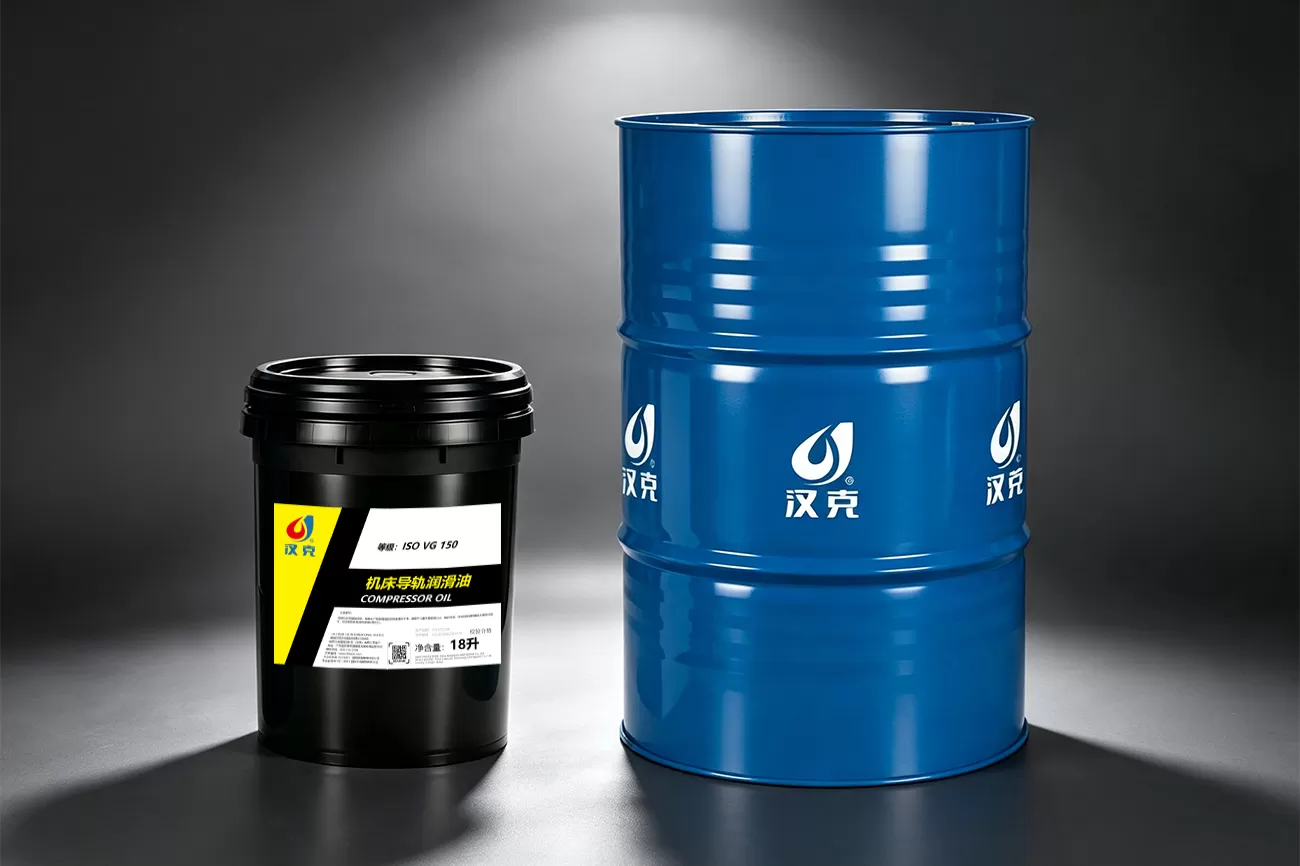
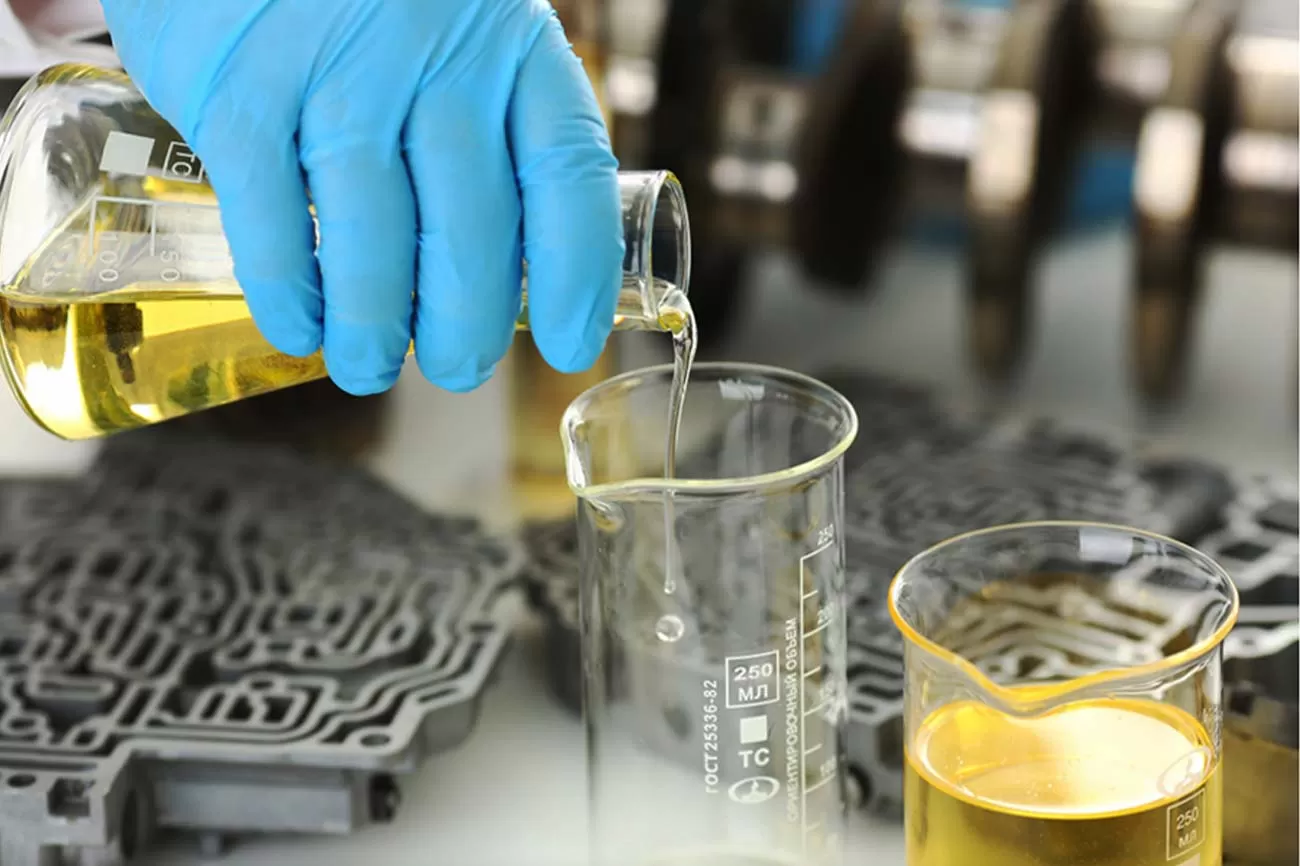

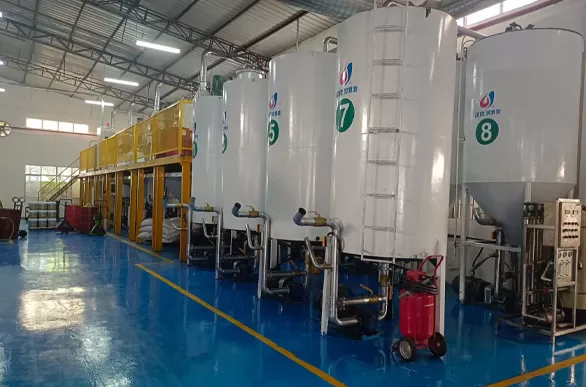

Competition in global industrial lubrication has never been as fierce as it is today. The requirements of European and American industrial giants have long gone beyond "lubrication" itself, but regarded it as a key link in equipment life, energy efficiency management and environmental compliance. Facing such a demanding market, a company from China, Hank Petroleum, has successfully penetrated the heart of Europe and the United States, providing more than 1,000 customized lubricant products to more than 1,000 global industrial customers. How did it do it?
The answer lies behind the word "customization". Instead of competing head-to-head with multinational oil companies in bulk general-purpose oils, Hank Oil focuses on "industrial special needs scenarios". From food-grade lubricants to high-temperature vacuum pump oils, from special oils for wind power gearboxes to hydraulic fluids for deep-sea drilling platforms, Hank Oil has established a huge formula database covering dozens of extreme working conditions such as extreme cold, extreme heat, high pressure, high humidity and heavy dust. Every time an order is received from a European or American customer, Hank's technical team does not simply replace the model, but goes deep into the customer's production line, analyzes equipment parameters, operating loads, oil change cycles and even environmental temperature and humidity, and then outputs a set of "one-to-one" lubrication solutions based on the combination technology of base oil and additives.
Customization alone is not enough to conquer European and American industrial giants. Quality certification is a hard threshold. Hank Oil knows this well, and its products have successively passed API certification of the American Petroleum Institute, ILSAC certification of the International Lubricant Standardization and Certification Committee, and registration of the European Union REACH regulations. They also meet the requirements of environmental directives such as RoHS and PAHs. More importantly, Hank Oil has established a whole-process traceability system - from crude oil procurement to blending and filling, each batch of customized oil has an independent "digital ID card", which records the formula, production parameters and quality inspection data. This transparent quality control management has surprised a German auto parts giant to find in a blind test that the oxidation stability of Hank lubricating oil has increased by 40% compared with its original oil, and the equipment bearing replacement cycle has been extended by 1.8 times.
In addition to product strength, Hank Oil has also played the service card of "old customer thinking". In the European and American markets, the pain point of industrial customers is often not the oil itself, but the loss of downtime. Hank Oil has established regional technical service centers in the Netherlands, the United States, Brazil and other places, and promises to arrive at the site within 48 hours to deal with lubrication failures. At the same time, its engineer team uses oil online monitoring technology to return data such as viscosity, acid value, and metal particle content of customer equipment in real time, and warns abnormal wear in advance through predictive maintenance models. This model of upgrading "selling oil" to "equipment lubrication health management" is the key to impressing those European and American industrial giants who advocate long-term.
When a US customer questioned whether Chinese brands could withstand the strict environmental regulations in North America, Hanke Oil responded with action - its biodegradable synthetic ester lubricant achieved a 92% degradation rate in the CEC L-33-A-93 biodegradability test, far exceeding traditional mineral oils. After the product was adopted by a Canadian mining group, the other party specifically mentioned "17% reduction in carbon emissions from lubrication systems" in the annual sustainability report. It is because of its continued investment in green technology that Hanke Oil has been selected in the European Union's "Green Lubricant Procurement Recommendation List" for three consecutive years.
Of course, conquering the European and American markets has never been achieved overnight. Hanke Oil's success is also due to its "reverse customization" R & D logic. European and American industrial giants often have internal technical specifications accumulated over decades. Hanke Oil actively opens the laboratory to allow customer R & D personnel to participate in the joint testing of oil formulations. In the field of aero-engine precision bearing lubrication, Hanke Oil even adjusts the molecular structure of base oils according to the extreme negative pressure environment data provided by customers to develop a unique product that can still maintain a stable oil film in a vacuum state of 10 ^ -3 Pa. This deep collaborative research and development model has transformed Hanke Oil from a simple supplier to a "technical partner" for customers.
Today, Hank Oil's custom lubricant products have been applied to more than 2,000 factories around the world, of which more than 60% are customers in Europe and the United States. From steel and paper to new energy vehicles and hydrogen energy equipment, Hank Oil's strategy of "thousands of products and thousands of matches" proves that in the race track of industrial lubrication, the real moat is not the brand halo, but the awe and study of every tiny working condition. In the future, as the global manufacturing industry evolves towards intelligence and greening, Hank Oil will continue to deepen customization and digital services, and inject more lasting and cleaner power into the world's industrial giants with the power of China's intelligent manufacturing.